
Stage 5 — Engines, Canopies, Floats, and Completion
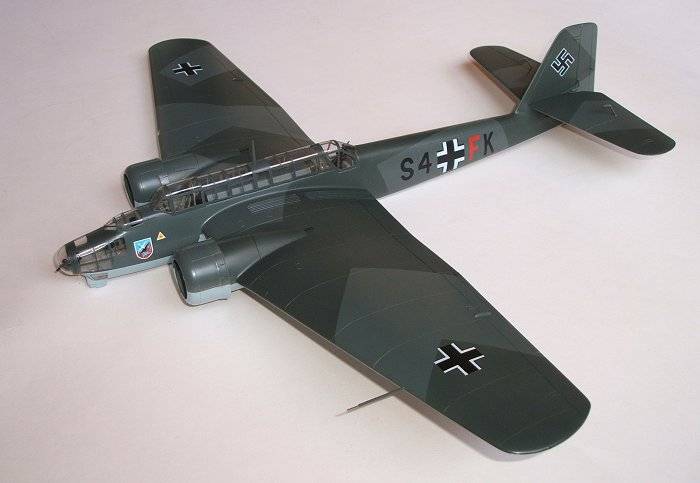
Introduction
This page is Stage 5 of the reconstructed reading of the He-115B Reform Record by Kazu Fukuda.
This is the final stage of the reform.
In Stage 1, the deteriorated model was opened again. In Stage 2, the nose section and canopy system were reconstructed. In Stage 3, the new nose was joined to the main body, and the surface was prepared. In Stage 4, markings, paint, and final preparations gave the aircraft its visual identity.
Stage 5 brings these separate lines of work together.
The upper camouflage is completed. The canopies and propellers are finished. The BMW 132 engines are assembled and mounted. The horizontal tailplane and small details are installed. The floats are finished and attached. The propellers and machine guns are added. Finally, the model is completed on the float trolley.
The main theme of this stage is the emergence of a renewed final image.
The reform no longer appears as a set of separate corrections. The parts begin to gather into a convincing whole.
Source Page
This Stage page is based on the following preserved source page:
Source entries covered in this stage:
| Entry | Date and time | Main subject |
|---|---|---|
| No.665 | 2008-02-17 09:45:23 | Painting the upper surface colors |
| No.666 | 2008-02-17 13:53:32 | Finishing the canopies |
| No.667 | 2008-02-17 13:54:42 | Finishing the propellers |
| No.670 | 2008-02-18 13:43:02 | Painting the upper surface colors |
| No.671 | 2008-02-19 15:31:42 | BMW 132 engines |
| No.672 | 2008-02-20 16:39:00 | Installing the canopies and engines |
| No.673 | 2008-02-21 16:40:35 | Installing the horizontal tailplane |
| No.674 | 2008-02-21 16:45:25 | Finishing the floats |
| No.675 | 2008-02-23 12:15:59 | Floats attached to the main body |
| No.676 | 2008-02-23 12:19:41 | Completed |
Although the original forum page preserves the entries in reverse chronological posting order, this Stage page reads them chronologically as the final gathering of the renewed model.
Completing the Upper Surface Colors
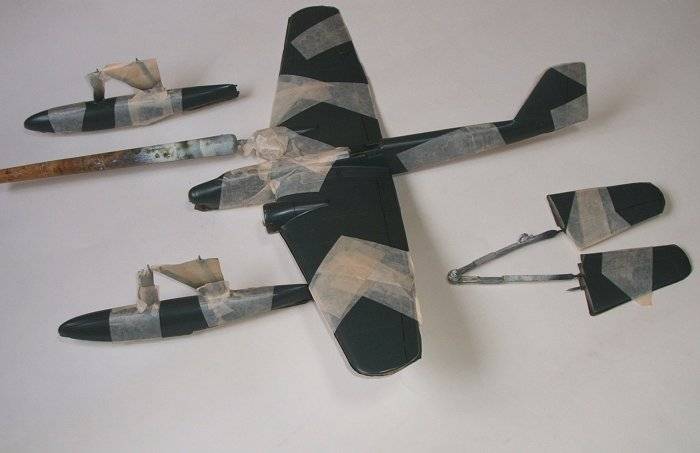
Stage 5 begins with the upper surface colors.
The upper surface colors are the RLM 72/73 splinter camouflage.
RLM 73 was painted first, and the model was masked in preparation for painting RLM 72.
This step follows the underside painting and marking work of Stage 4.
At this point, the model is no longer only a repaired body. It is entering its final visual scheme.
Key source phrase
“The upper surface colors are the RLM 72/73 splinter camouflage.”
The splinter camouflage is important because it changes the model’s appearance as a whole.
Panel lines, markings, and surface preparation all remain important. But the upper camouflage gives the aircraft its large-scale visual rhythm.
The model begins to read not as a collection of repaired areas, but as a single aircraft surface.
Removing the Masking and Retouching
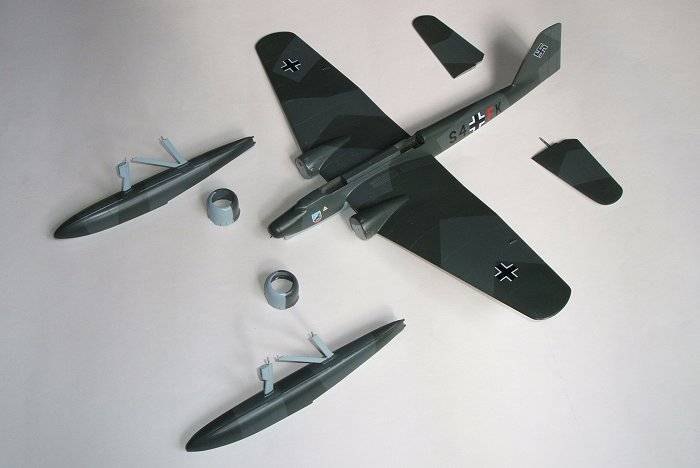
After the upper surface colors had dried, the masking was removed.
Small scratches made while peeling off the masking tape were carefully retouched with a brush.
This is a small entry, but it is very important.
The masking process makes sharp camouflage possible. However, masking also carries risk. When the tape is removed, small scratches may appear.
The record therefore shows that finishing is still a process of correction.
Even at this late stage, the model is not simply moving forward in a straight line. The maker checks the surface again and repairs what the process itself has disturbed.
Key source phrase
“Small scratches made while peeling off the masking tape were retouched carefully with a brush.”
This phrase connects Stage 5 back to the entire logic of the reform.
The final image emerges through correction.
Even the act of revealing the paint may create new problems. Those problems are seen, judged, and corrected.
Finishing the Canopies
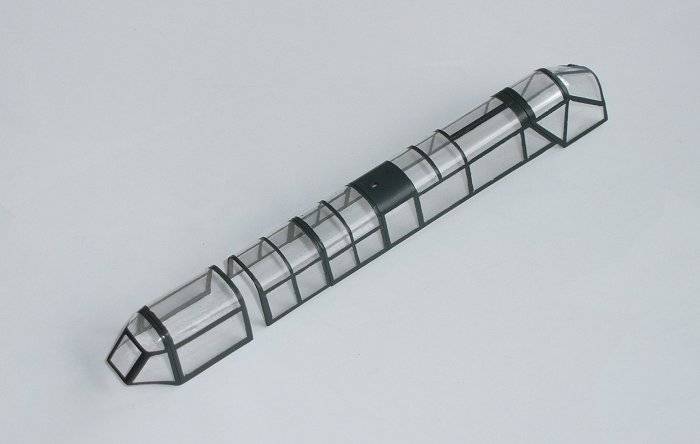
The canopies were finished.
This brief entry carries more meaning when read in relation to Stage 2.
In Stage 2, the canopy system required wooden formers, heat-pressing, division into sections, masking, trial fitting, gap correction, and interior installation.
By Stage 5, those earlier operations now approach their final visible state.
The canopy is one of the most important visual elements of the He-115B.
It is transparent, thin, and complex. It defines the cockpit, nose, and gunner’s areas. It also reveals or suggests the interior work beneath it.
The finished canopies therefore represent the completion of a long chain of judgment.
They are not merely attached parts. They are the visible result of the earlier reconstruction.
Finishing the Propellers
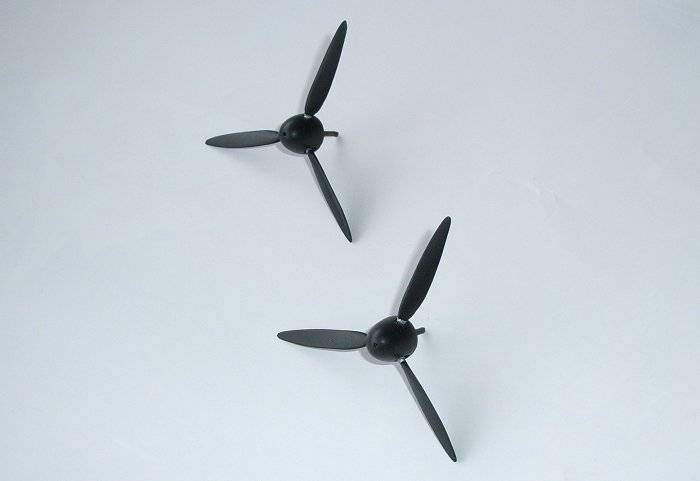
The propellers and spinners were also painted and finished.
Like the canopies, the propellers are small compared with the main body, but visually important.
They occupy the front of the engine nacelles. They give direction and function to the aircraft image. Without them, the model remains incomplete even if the main body is painted.
The propellers also prepare the viewer to read the aircraft as a machine rather than only as a shape.
In the final stage, such details are not secondary.
They are the elements that make the aircraft image convincing.
BMW 132 Engines
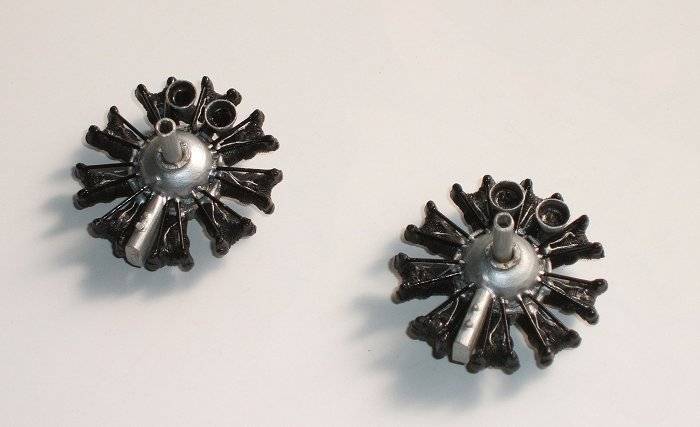
The BMW 132 engines were finished.
The cylinder blocks and crankcases were resin parts received from the late Honorary Chairman Kotakeuchi. Pushrods, ignition wiring, and other small parts were added and assembled together.
Key source phrase
“The cylinder blocks and crankcases are resin parts received from the late Honorary Chairman Kotakeuchi. Pushrods, ignition wiring, and other small parts were added and assembled together.”
This entry is significant for two reasons.
First, the engines are technically important. The He-115B’s nacelles and propellers are major elements of its appearance. The engines give depth and mechanical presence to those areas.
Second, this entry preserves a trace of community and inheritance.
The resin parts were received from the late Honorary Chairman Kotakeuchi. They were not simply anonymous materials. They carried a relationship within the model-making community.
In this sense, the reform record preserves not only work procedures, but also connections among makers.
Interpretive point
The finished engines are technical details, but they also carry a small archival memory of shared materials and model-making relationships.
This is one reason the record deserves preservation.
It shows how a finished model can contain the traces of more than one person’s contribution.
Installing the Canopies and Engines
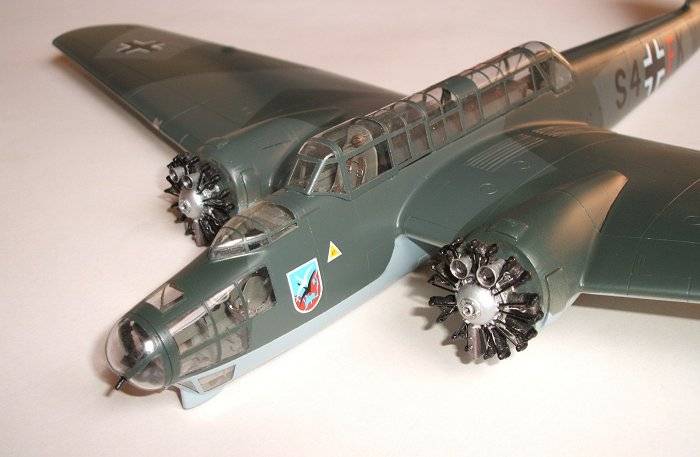
The masking was removed from the bombardier’s canopy.
The canopies for the cockpit and the rear gunner’s station were installed.
The BMW 132 engines were also mounted to the nacelles.
This is a major moment of integration.
The canopy work from Stage 2 and the engine work from Stage 5 now meet the painted body.
The aircraft begins to acquire its main visual centers:
- the nose canopy
- the cockpit canopy
- the rear gunner’s station
- the engine nacelles
- the BMW 132 engines
These areas draw the viewer’s eye.
They also make the aircraft readable as a complex machine.
Key source phrase
“The masking was removed from the bombardier’s canopy, and the canopies for the cockpit and the rear gunner’s station were installed.”
The removal of masking is especially meaningful.
Earlier in the process, masking protected the transparent areas. Now the mask is removed, and the canopy begins to function visually.
The protected surface becomes visible.
The hidden preparation becomes part of the final image.
Installing the Horizontal Tailplane
The horizontal tailplane was installed.
The engine cowlings were also attached.
The mass balances, antenna, pitot tube, and other details were fitted.
At this point, the record states that the model finally began to look convincingly like a He 115.
Key source phrase
“The mass balances, antenna, pitot tube, and other details were also fitted, and the model finally began to look convincingly like a He 115.”
This is perhaps the most important sentence in Stage 5.
It does not merely say that the parts were attached.
It says that the model began to look convincing.
This means that the accumulated operations of the reform had reached a threshold.
The model was no longer only repaired. It was no longer only painted. It was no longer only assembled.
It had regained the presence of the aircraft.
Interpretive point
Completion is not only the moment when all parts are attached.
Completion begins when the model becomes convincing as the aircraft it represents.
This phrase gives the entire He-115B Reform Record its interpretive center.
The reform has been moving toward this moment since Stage 1.
The damaged model was opened again so that it could once more become convincing as form.
Finishing the Floats
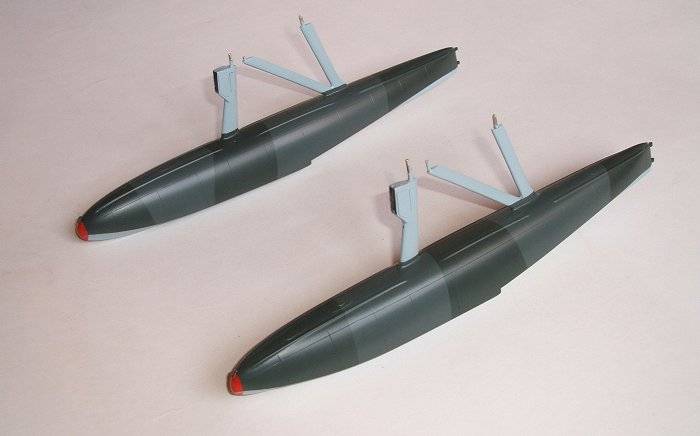
A small ring for passing a mooring rope was attached to the tip of each float.
At this point, only the attachment of the floats to the main body remained.
This entry is short, but important.
The floats are essential to the identity of the He-115B as a floatplane.
They determine the stance, balance, and character of the completed model.
The small rings at the float tips are minor details, but they make the floats more specific and functional.
They suggest how the aircraft exists in water and at mooring.
Such details help the model become more than a general shape.
They help it become a situated aircraft.
Attaching the Floats to the Main Body
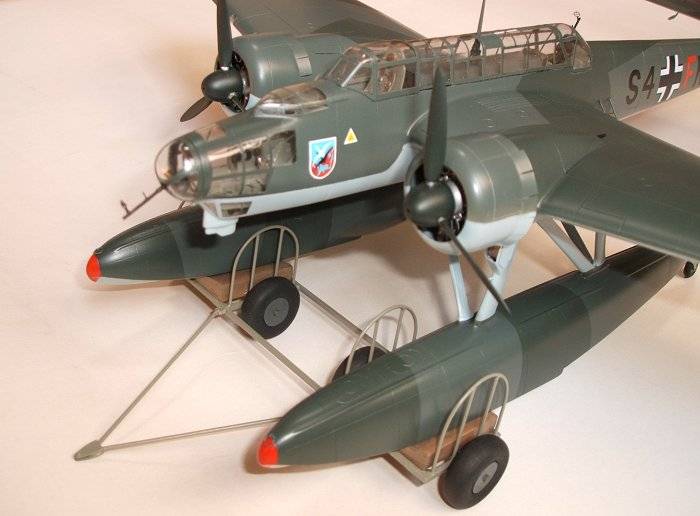
The floats were attached to the main body.
The propellers and machine guns were also installed.
With these operations, the work was brought at last to completion.
The model is shown resting on the float trolley.
Key source phrase
“The floats were attached to the main body, and the propellers and machine guns were also installed, bringing the work at last to completion.”
This moment connects back to several earlier stages.
The floats had been stripped in Stage 1. They were surfaced in Stage 3. They were painted in Stage 4. The trolley was prepared in Stages 3 and 4. Now, in Stage 5, the floats are finally attached to the main body and the model rests on the trolley.
The earlier provisional work now becomes final.
The trolley is no longer simply a separate support structure. It becomes part of the completed presentation.
The floatplane is shown in a stable, readable condition.
Completed
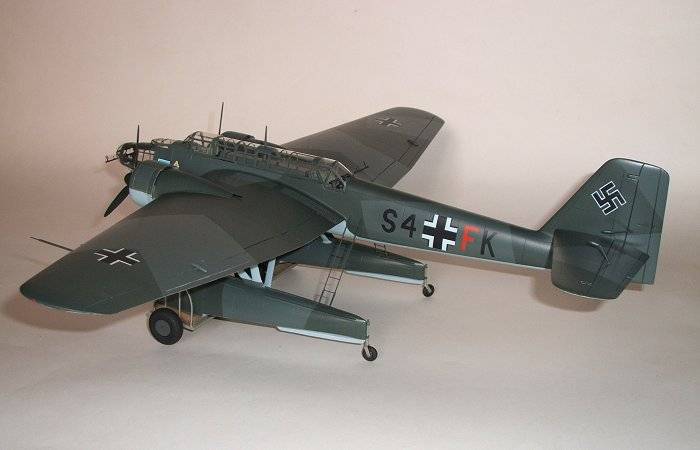
The final entry is very short.
Key source phrase
“It has finally been completed.”
The brevity of this sentence is striking.
After many entries of cutting, stripping, shaping, fitting, masking, painting, correcting, installing, and assembling, the completion is expressed simply.
This simplicity gives the sentence weight.
The reform has reached its end.
Yet the meaning of the completion can only be understood by reading the whole process.
The completed model is not simply the old model returned to its former state.
It is the result of renewed judgment.
The surface was reconsidered. The nose was rebuilt. The canopy system was remade. The markings were reconstructed. The engines, floats, and details were added. The model was brought into a new final condition.
Meaning of Stage 5
Stage 5 is the stage in which the renewed final image emerges.
It gathers together everything that had been prepared in the earlier stages.
The model’s surface receives its final upper camouflage. The canopies become visible as finished transparent forms. The propellers and engines give mechanical presence. The horizontal tailplane and small fittings complete the aircraft’s outline and details. The floats restore the floatplane identity. The trolley supports the final presentation. The final photograph records the completed result.
The most important point is that Stage 5 is not merely the end of labor.
It is the moment when the reform becomes visible as a new whole.
The model has passed through deterioration, dismantling, rebuilding, correction, surface judgment, marking, painting, and final assembly.
Now those operations no longer appear as separate tasks.
They settle into a single completed form.
Reading the Images
The images in this stage should be read as evidence of final integration.
| Image | What it shows | How to read it |
|---|---|---|
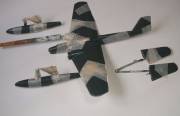 | RLM 72/73 splinter camouflage in progress | the prepared body receives its final large-scale color pattern |
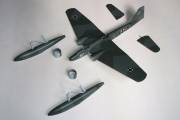 | masking removed after upper colors | the camouflage is revealed and corrected |
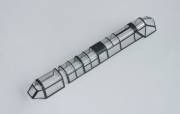 | canopies finished | the earlier canopy reconstruction reaches its visible result |
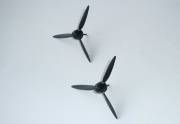 | propellers and spinners painted and finished | the engine areas gain functional completeness |
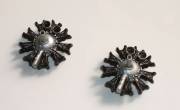 | BMW 132 engines assembled with added details | mechanical presence is restored through engine detail |
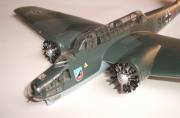 | canopies and engines installed | major visual centers are integrated into the painted body |
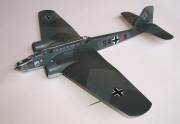 | tailplane, cowlings, antenna, pitot tube, and details fitted | the model becomes convincing as a He 115 |
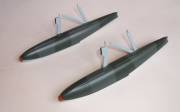 | rings attached to the float tips | float details give the aircraft a functional setting |
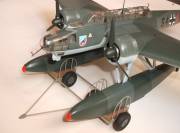 | floats, propellers, and machine guns installed | the aircraft and support system come together |
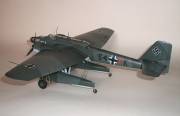 | completed He-115B reform | the renewed final image is fully visible |
Looking Back at the Whole Reform
Stage 5 also allows the reader to look back at the entire reform.
The final image contains traces of all earlier stages.
The nose area recalls the cutting away and rebuilding of Stages 1 and 2. The surface recalls the surfacer, putty, and panel lines of Stage 3. The markings and colors recall the masking and painting of Stage 4. The engines, canopies, floats, and trolley gather the model into its final presentation.
In this sense, the completed model is not separate from the process.
It contains the process.
A viewer who sees only the finished model sees the result. A reader who follows the reform record sees the decisions that made the result possible.
This is the archival value of the record.
Connection Back to the Entrance Page
This is the final Stage page in the reconstructed reading sequence.
After reading Stage 5, readers may return to the entrance page to review the larger structure of the reform.
They may also return to the Original Record Pages to compare the preserved source order with the chronological reading developed across the five Stage pages.
The completed model should be understood together with the full process:
- Stage 1 — the model is opened again
- Stage 2 — new form is reconstructed
- Stage 3 — surface and coherence are renewed
- Stage 4 — identity is restored through finishing
- Stage 5 — the renewed final image emerges
Navigation
- Previous stage: Stage 4 — Markings, Painting, and Final Preparation
- Entrance page: He-115B Reform Record
- Source page: Original 05
- Original record index: Original Record Pages
Closing Note
Stage 5 is the stage of renewed completion.
It shows how separate corrected parts become a single convincing form.
The upper camouflage, canopies, engines, tailplane, floats, propellers, machine guns, and trolley all contribute to the final image.
But the meaning of this completion does not lie only in the finished appearance.
It lies in the fact that this model had once been completed, then deteriorated, then was opened again, judged again, corrected again, and completed again.
The final model is therefore not simply a repaired object.
It is the visible conclusion of a process of re-seeing.
The He-115B Reform Record ends with completion, but its archival value lies in the path that led there.