
Stage 2 — Nose Reconstruction, Formers, and Canopy Work
Introduction
This page is Stage 2 of the reconstructed reading of the He-115B Reform Record by Kazu Fukuda.
This stage follows the opening phase of the reform.
In Stage 1, the deteriorated model was opened again. The nose section was cut away, the horizontal tail was disassembled, and the old painted surface was removed.
Stage 2 begins from that opened condition.
The main theme of this stage is continuous correction.
The reform now moves from problem recognition to active reconstruction.
A new nose section is shaped. It is trial-fitted to the main body. Wooden formers are made. Canopies are heat-pressed. Complex forms are divided into separate parts. Gaps are corrected. Interior parts are prepared and installed.
This stage shows that reform is not simple replacement.
The new parts must be made in relation to the existing body.
They must fit the old structure, anticipate the thickness of new materials, and preserve the visual character of the He-115B.
Source Page
This Stage page is based on the following preserved source page:
Source entries covered in this stage:
| Entry | Date and time | Main subject |
|---|---|---|
| No.630 | 2007-11-01 08:56:02 | Shaping the new nose section |
| No.632 | 2007-11-01 09:03:54 | Trial fitting of the nose section |
| No.633 | 2007-11-04 10:38:19 | Wooden formers for the canopies |
| No.634 | 2007-11-08 09:35:46 | Heat-pressed canopies |
| No.636 | 2007-11-08 09:50:42 | Nose bombardier’s canopy |
| No.638 | 2007-11-15 10:35:52 | Trial fitting of the upper canopy |
| No.639 | 2007-11-16 13:56:32 | Forward rotating gun position canopy and ring |
| No.641 | 2007-11-24 14:23:28 | Interior parts for the nose bombardier’s position |
| No.642 | 2007-11-27 18:03:38 | Installation of interior parts for the nose bombardier’s position |
| No.643 | 2007-11-29 11:42:31 | Nose bombardier’s canopy |
Although the original forum page preserves the entries in reverse chronological posting order, this Stage page reads them chronologically as a process of reconstruction.
From Removal to Reconstruction
Stage 2 begins after the old nose section has been cut away.
At this point, the model is no longer simply being dismantled.
It is beginning to receive new form.
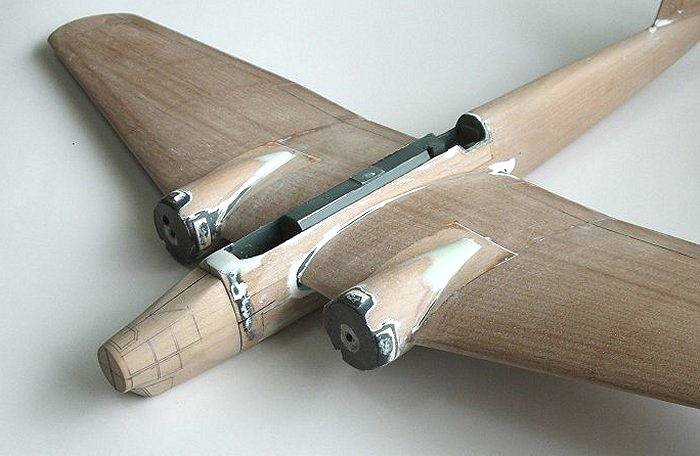
The new nose section is shaped from the material block prepared in Stage 1. This new part has a double role.
It is not only the new nose section itself. It also serves as the wooden former for heat-pressing the bombardier’s canopy.
Key source phrase
“The new nose section was shaped.”
“This will also serve as the wooden former for heat-pressing the bombardier’s canopy.”
This is an important point.
The new part is not only a replacement part. It is also a tool for making another part.
In this way, the reform advances through linked operations.
One form becomes the basis for another form.
Trial Fitting and Allowance
The next important action is trial fitting.
The newly shaped nose section is temporarily fitted to the main body.
This act is central to the logic of reform.
In a new build, parts may be shaped according to drawings and then assembled. In a reform, however, new parts must meet an existing body.
The existing body is not an abstract plan. It is a real object with its own dimensions, surfaces, and irregularities.
For this reason, the new nose section is not made exactly the same size as the main body.
The thickness of the PVC sheet that will be heat-pressed is taken into account. The width and height of the nose section are made slightly smaller than those of the main body.
Key source phrase
“Taking into account the thickness of the PVC sheet that will be heat-pressed, the width and height of the nose section were made slightly smaller than those of the main body.”
This phrase reveals a very careful kind of judgment.
The maker is not only looking at the current part. He is anticipating the next layer that will be added.
The final fit is imagined before the part is complete.
This is one reason Stage 2 should be read as a stage of continuous correction.
The form is not determined all at once. It is adjusted in anticipation of later operations.
Making Wooden Formers
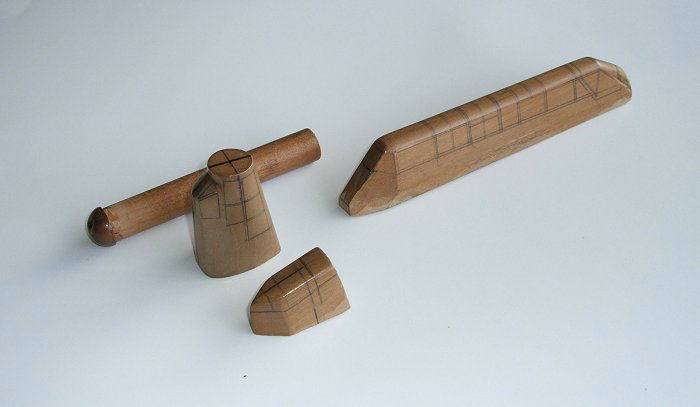
After the nose section has been shaped and trial-fitted, additional wooden formers are made for the canopy parts.
These include formers for:
- the hemispherical rotating gun position canopy at the nose tip
- the nose bombardier’s canopy
- the upper nose canopy
- the upper fuselage canopy
The wooden former is not a visible part of the finished model.
However, it is essential to the final appearance.
It determines the shape of the transparent canopy. It mediates between carved wood and clear plastic.
In this stage, Mr. Fukuda is not only making parts. He is also making the tools that will make the parts possible.
Interpretive point
The former is an invisible foundation of the visible form.
It does not remain in the finished model, but it determines the shape that the viewer will later see.
This is especially important for aircraft such as the He-115B, where the nose and canopy areas strongly affect the character of the aircraft.
The canopy is not merely a transparent cover.
It defines the shape, rhythm, and visual identity of the forward fuselage.
Heat-Pressed Canopies
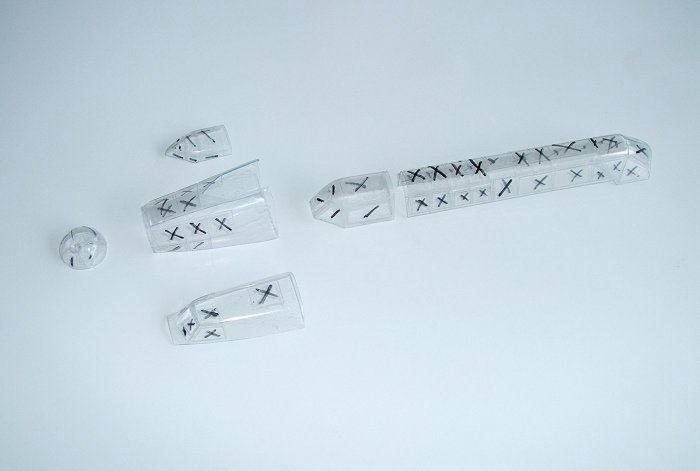
The canopies were made by heat-pressing.
The record shows several canopy parts together:
- forward nose gun position canopy
- upper nose canopy
- upper half of the bombardier’s canopy
- lower half of the bombardier’s canopy
- upper fuselage canopy
The window frame portions were left exposed, while the transparent parts were masked with cellophane tape.
This stage shows the close relationship between making and protection.
The transparent areas must remain clear. The frame portions must be defined. The canopy must be formed, handled, masked, and later integrated into the body.
Key source phrase
“All canopies were made by heat-pressing.”
Heat-pressing is not simply a technical method here.
It is a way of recreating the thin, transparent, curved surfaces that are essential to the aircraft’s appearance.
A solid model depends on carved volume.
But the canopy introduces a different kind of form: thinness, transparency, and surface tension.
Dividing a Complex Form
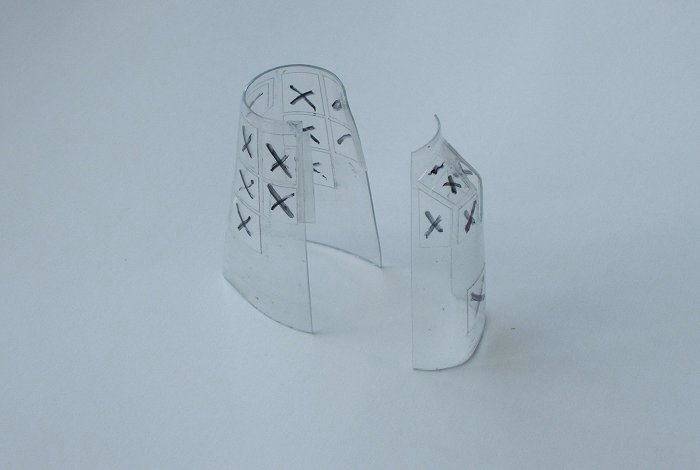
The nose bombardier’s canopy had a complex shape.
The record notes that it was difficult to form it as a single piece. For that reason, it was heat-pressed in upper and lower sections.
These sections would later be joined and finished as a single canopy.
A bonding flange was attached to the upper section in advance.
Key source phrase
“The nose bombardier’s canopy has a complex shape, and it is difficult to form it as a single piece, so it was heat-pressed in upper and lower sections.”
This is one of the most important moments in Stage 2.
The maker does not force the form into a single operation.
Instead, he changes the method.
The complex form is divided.
The division is not a compromise in a negative sense. It is a judgment about how the final form can be achieved.
Interpretive point
A difficult form is not solved by strength alone.
It is solved by changing the process.
This is a clear example of continuous correction.
The maker responds to the difficulty of the form by reorganizing the work itself.
Correcting the Upper Canopy Fit
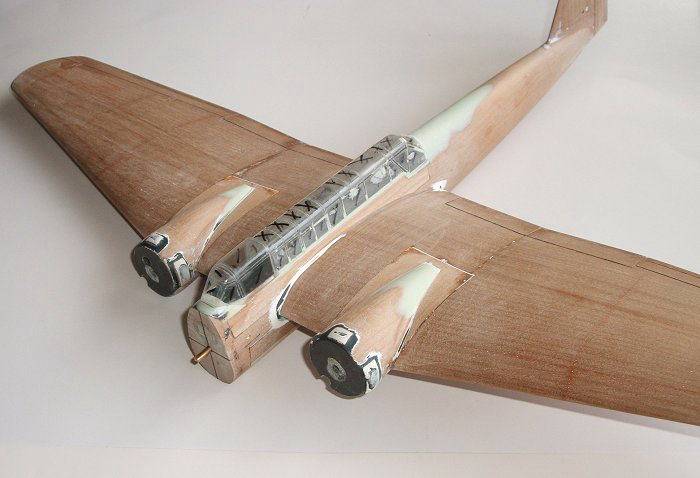
The upper canopy for the fuselage was also trial-fitted.
During this trial fitting, slight gaps appeared in some areas.
These were corrected with polyester putty.
The canopy would be removed again after this. After painting, the interior seat parts would be installed, and the canopy would then be attached permanently.
Key source phrase
“When the new upper canopy for the fuselage was trial-fitted, slight gaps appeared in some areas, so these were corrected with polyester putty.”
This passage is especially valuable because it shows the actual rhythm of the reform.
Fit. Find the gap. Correct the gap. Remove the part again. Continue the later sequence. Attach permanently only at the proper stage.
The model is not assembled in a simple forward line.
It moves through temporary attachment, evaluation, correction, removal, painting, interior installation, and final attachment.
This is the practical meaning of continuous correction.
The Rotating Gun Position
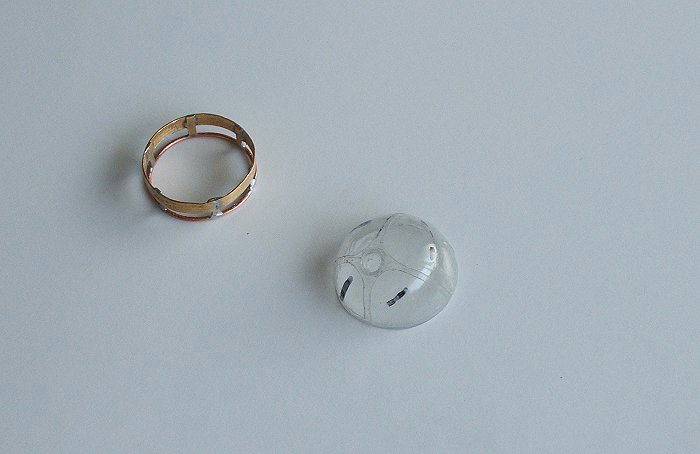
Another important detail is the forward rotating gun position at the tip of the nose bombardier’s position.
The record shows the canopy and the internal rotating ring.
A 7.9 mm MG 15 machine gun will be fitted at the center of the rotating gun position.
This part is small, but it is visually significant.
It is located at the nose tip, where the viewer’s eye is naturally drawn. It also gives functional meaning to the canopy form.
The nose is not only a shape. It is a space with positions, equipment, and roles.
By making the rotating ring and preparing the gun position, Mr. Fukuda gives the nose section a stronger internal logic.
Interior Parts for the Nose Bombardier’s Position
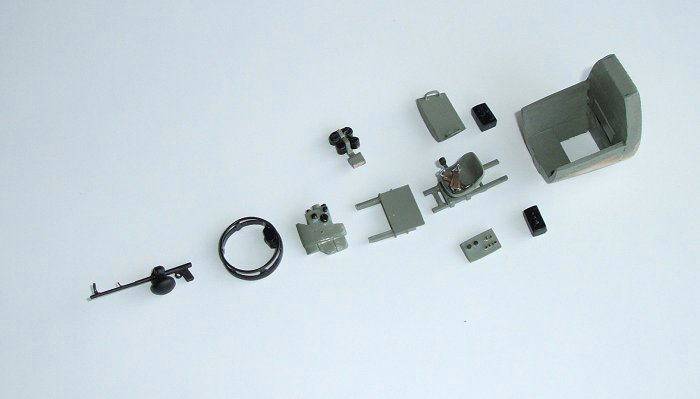
The interior parts for the nose bombardier’s position were then completed.
The record notes that part of the wooden former used for heat-pressing the canopy can be seen at the far right.
This photograph is useful because it shows several layers of the process together.
There are parts that will be installed inside the model. There is also a former that helped create the canopy. The visible and invisible elements of the making process appear together.
Interpretive point
The reform does not only rebuild the exterior form.
It also reconstructs the spatial meaning of the nose section.
The He-115B’s nose area is not merely an outer shell.
It includes the bombardier’s position, the rotating gun position, transparent surfaces, internal equipment, and the relationship between them.
Stage 2 therefore reconstructs both outer form and inner arrangement.
Installing the Interior Parts
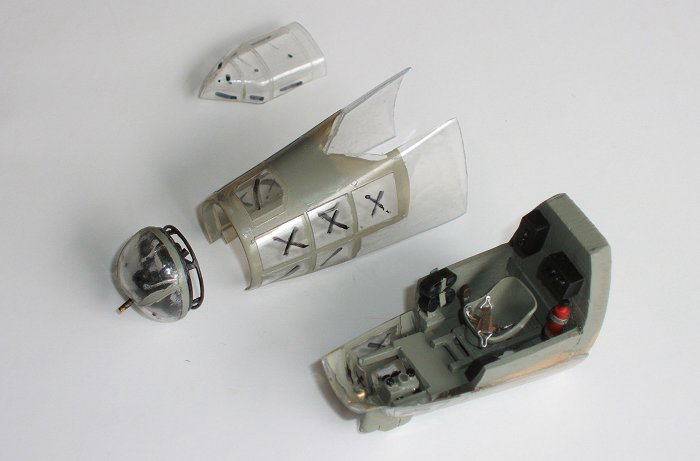
The lower canopy of the nose bombardier’s position was installed.
The interior parts were then fitted.
After this, the upper canopy would be attached, and finally the forward rotating gun position canopy would be installed.
This order is important.
The parts cannot be assembled in any order.
The transparent canopy, internal parts, and forward gun position each depend on the previous operation.
The sequence must be controlled.
Key source phrase
“The lower canopy of the nose bombardier’s position was installed, and the interior parts were fitted.”
Here again, the reform proceeds through staged decision-making.
The model is not merely being filled with detail. The interior is being placed at the correct moment within a larger assembly sequence.
Joining the Nose Bombardier’s Canopy
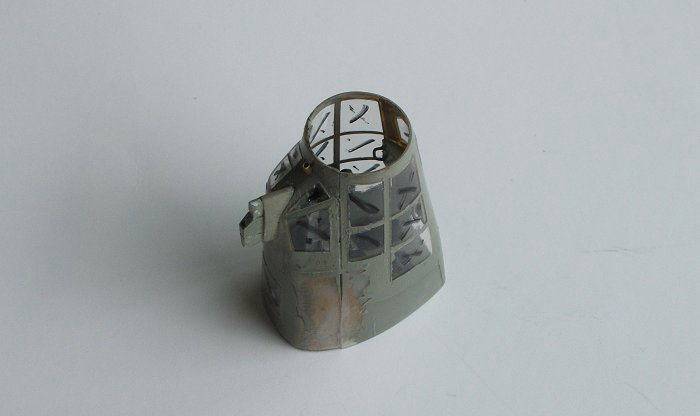
By the final entry of this stage, the upper half of the nose bombardier’s canopy had been joined.
Only the forward rotating gun position canopy remained.
This marks the near completion of the reconstructed nose canopy area.
The process has moved from a shaped wooden nose section to trial fitting, formers, heat-pressed parts, divided canopy sections, putty correction, interior parts, and canopy joining.
The nose area is now no longer simply an absence created by cutting away the old part.
It has become a reconstructed zone.
Meaning of Stage 2
Stage 2 is the stage in which the reform becomes constructive.
However, it is not simply a stage of making new parts.
It is a stage of continuous correction.
The new nose section must fit the old body. The PVC thickness must be anticipated. The canopy form must be divided where necessary. Gaps must be corrected. Interior parts must be installed in the correct sequence. Transparent parts must be protected. The final attachment must wait until the proper time.
These actions show a mode of making based on repeated judgment.
The maker does not simply execute a fixed plan.
He responds to the form as it develops.
This is why Stage 2 is central to understanding the He-115B Reform Record.
It shows how a damaged, opened model begins to receive a new form through careful, step-by-step correction.
Reading the Images
The images in this stage should be read as evidence of reconstruction and adjustment.
| Image | What it shows | How to read it |
|---|---|---|
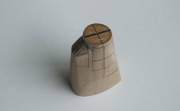 | the new nose section being shaped | the old missing area begins to receive new form |
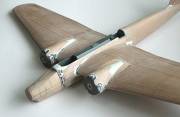 | the new nose section trial-fitted to the main body | new form is tested against the existing body |
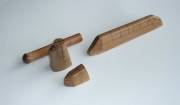 | wooden formers for heat-pressing canopy parts | invisible tools determine visible transparent form |
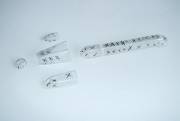 | heat-pressed canopy parts | transparent surfaces are prepared as separate elements |
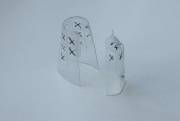 | upper and lower sections of the bombardier’s canopy | a complex form is divided in order to be achieved |
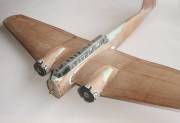 | upper canopy trial-fitted and corrected | gaps reveal where form must be adjusted |
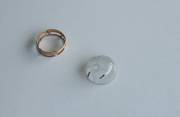 | canopy and internal rotating ring | the nose tip gains functional and visual structure |
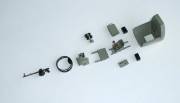 | interior components and former | internal detail and making tools appear together |
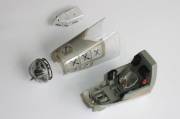 | lower canopy and interior parts installed | the interior is fitted within the assembly sequence |
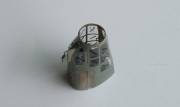 | upper half of the nose bombardier’s canopy joined | the reconstructed nose area approaches completion |
Connection to the Next Stage
Stage 2 ends with the nose bombardier’s canopy largely joined.
The reconstructed nose section is nearly ready to become part of the whole body again.
This leads directly to Stage 3.
In Stage 3, the newly made nose section will be joined to the main body. Gaps will be filled. Surfacer will be applied. Panel lines will be engraved. The reform will move from the reconstruction of a local area toward the renewed coherence of the entire model.
Navigation
- Entrance page: He-115B Reform Record
- Source page: Original 02
Closing Note
Stage 2 is the stage of continuous correction.
It shows how the reform changes from dismantling to reconstruction.
The old nose section has been removed. A new nose section is shaped. The canopy system is remade through wooden formers and heat-pressed parts. Complex shapes are divided. Gaps are corrected. Interior parts are installed. The forward nose area begins to regain its structure.
This stage makes clear that reform is not the simple replacement of damaged parts.
It is a process of testing, adjusting, correcting, and deciding again.
Through this process, the opened model begins to move toward a renewed form.