
This is an old revision of the document!
Fukuda Kazu
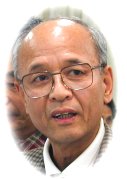
Profile
Name: Kazu Fukuda
Date of Birth: 1941-05-21
Date of Passing: 2009-09-08
Place of Birth: Fengtian, former Manchukuo (present-day Shenyang, China)
Prologue
The publication of Mr. Kazu Fukuda’s work on this site stems from our personal exchanges during his lifetime.
At first, the purpose was simply to introduce his completed solid models. However, through our exchanges, it gradually became clear that the process of making was also of great historical value.
Mr. Fukuda did not merely leave finished models. He also left records of materials, shaping, correction, surface preparation, painting, markings, assembly, and even large-scale reform work.
These records allow us to see something that finished models alone cannot show:
- how problems were discovered
- how corrections were made
- how decisions were updated
- how a convincing final form gradually emerged
His methods—his choice of materials, precision in shaping, careful correction, and disciplined finishing—embody the craftsmanship and analytical mindset that define Japan’s postwar solid modeling culture.
This archive aims to preserve not only his completed works, but also the process, judgment, and disciplined creativity behind them.
— Compiled and edited by Hagihara
Modeling History
Around 1954, I purchased my first kit in a vinyl bag and built my first solid model. Since then, I have been captivated by the joy of model making and have continued for over fifty years.
In 1965, I joined the Osaka Solid Model Club “Saiun Association,” and from that time on I have devoted myself exclusively to German Luftwaffe aircraft.
Every model is built to a consistent 1/50 scale.
I was determined to keep producing as many Luftwaffe aircraft as possible—as long as my physical strength, mental focus, and eyesight would allow.
Archival Significance
Mr. Fukuda’s records are important not only because they show highly finished solid models, but also because they preserve the thinking process of the maker.
In many model-making records, the completed model is the main focus. In Mr. Fukuda’s records, however, the intermediate stages are also carefully documented.
This makes it possible to follow the development of form through:
- selection of materials
- rough shaping
- trial fitting
- correction
- surface treatment
- painting
- markings
- final assembly
His records are therefore valuable as both craft documentation and visual archives.
They show how a solid model is not simply produced from a plan, but gradually established through repeated observation and judgment.
Works and Records
The following pages present Mr. Kazu Fukuda’s solid model records.
They are not only records of completed models, but also records of process, observation, correction, and judgment.
Each aircraft record has its own structure, because the original records were organized in different ways.
Some records are already available in the archive, while others are still being prepared.
Available Records
Focke-Wulf Fw 190 D-9
Type of record: Detailed construction process record
Scale: 1:50
Status: Available
This record follows the making of a Focke-Wulf Fw 190 D-9 solid model through materials, shaping, surface preparation, painting, markings, final assembly, and gallery photographs.
It is one of the most important records in this archive because it shows not only the completed model, but also the steps by which the form was gradually established.
The value of this record lies in the visibility of process. Readers can follow how the model moves from material and outline toward a finished aircraft form.
Heinkel He 115 B
Type of record: Reform record of an existing completed model
Scale: 1:50
Status: Available
This record presents the reform and refinement of a Heinkel He 115 B solid model.
Unlike a standard construction record, this is a record of a model that had already been completed once. After many years, the model had deteriorated, and Mr. Fukuda opened it again for major reform.
The record shows the process of cutting away the old nose section, removing deteriorated paint, reconstructing the nose and canopy system, preparing the surface, repainting markings and camouflage, and bringing the model to a renewed completion.
For this reason, the He 115 B record is especially important within this archive.
It shows that completion is not always the end of making. A completed model can be reconsidered, corrected, and brought to a new final image.
The archive preserves this record in two layers:
- Original pages — preserving the original forum-based record structure
- Stage pages — reconstructing the process chronologically and interpretively
Records in Preparation
Focke-Wulf Fw 200 C-3
Type of record: Parts and process-based construction record
Scale: 1:50
Status: In preparation
This record will present Mr. Fukuda’s construction of a Focke-Wulf Fw 200 C-3 solid model.
The Fw 200 C-3 is a large multi-engine aircraft, and its construction record is expected to be especially useful for understanding how Mr. Fukuda interpreted complex aircraft forms through separate parts and working processes.
The record will be organized around major components and stages, such as the main mockup, landing gear, nacelles, engines, propellers, armament, painting, assembly, and the completed model.
At present, this section is still under preparation.
When completed, it will be added to this archive as another important example of Mr. Fukuda’s process-based documentation.
How to Read These Records
The three records above should not be read in exactly the same way.
The Fw 190 D-9 record is a detailed construction process. It shows how a model is built from the beginning and how the aircraft form gradually appears.
The Fw 200 C-3 record is organized mainly by parts and working processes. It is useful for understanding the construction of a large and complex aircraft model.
The He 115 B record is different. It is a reform record of an already completed model. Its importance lies in showing how a finished work was reopened, judged again, corrected, and completed again.
Together, these records show the breadth of Mr. Fukuda’s work.
They also show why his records are valuable for the Solid Model Archive.
They preserve not only what was made, but how it was seen, judged, corrected, and brought into form.
Notes on Historical Aircraft Subjects
Some aircraft subjects and markings in these records belong to wartime historical contexts.
They are presented here solely as part of the historical and documentary record of scale model making.
The purpose of this archive is not to endorse any ideology or military action, but to preserve and study the techniques, processes, and records of solid model craftsmanship.