
This is an old revision of the document!
03 Mock-up: Cowling and Radiator
Holes are bored into the nose cowling—whose outer shape has already been roughly formed together with the fuselage block—in order to fit the annular radiator. After rough cutting with a round gouge, the final shaping is done using a round stick (I used the handle of a carving knife) wrapped with sandpaper.
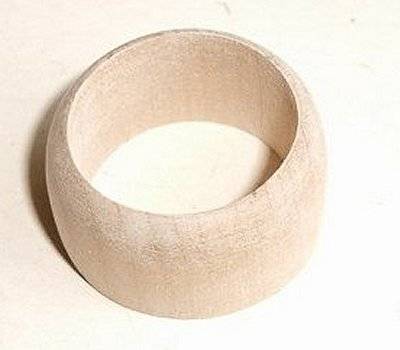 |
|---|
| Fig. 3-1 Cowling |
Once the inner diameter of the cowling has been finished, proceed to fabricate the annular radiator. Begin by making the central core piece of the radiator. This component is made from the same stock material used for the spinner. Accurately carve the square block into shape.
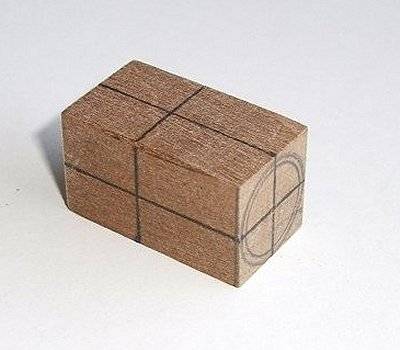 |
|---|
| Fig. 3-2 Radiator Core Material |
After roughly shaping the square block with a knife, refine it with a file and sandpaper to form a round bar. Then divide it into two pieces—one for the spinner and the other for the radiator.
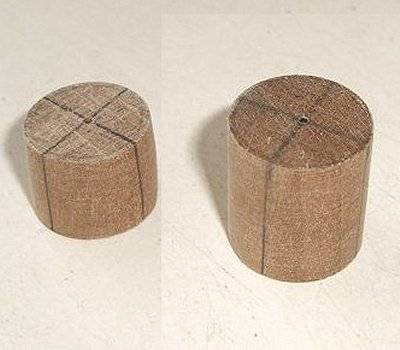 |
|---|
| Fig. 3-3 Spinner and Radiator Components |
Next, cut scrap calendar paper into strips about 10 mm wide. Wrap these strips around the round bar to build up the radiator fins.
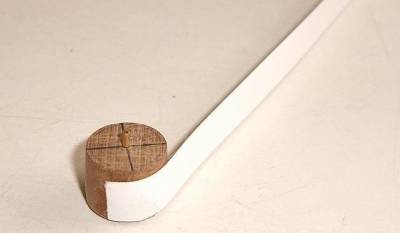 |
|---|
| Fig. 3-4 Radiator Fins |
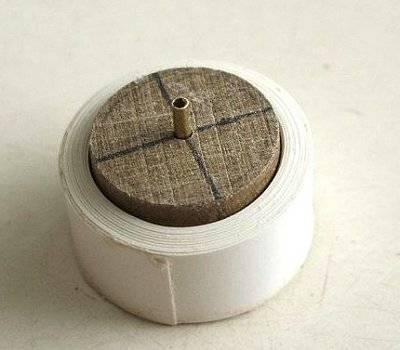
Continue wrapping the paper strips until the diameter fits snugly inside the previously finished cowling. Glue the end securely so that the roll does not unravel.
 |
|---|
| Fig. 3-5 Wrapped Radiator Fins |
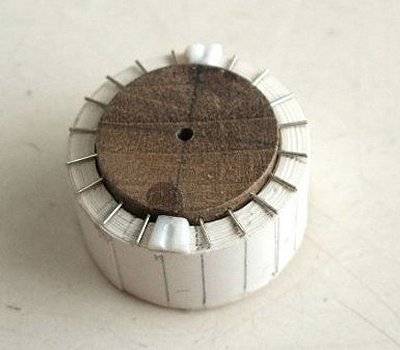
Next, attach eighteen 0.3 mm nickel-silver wires to the front face of the radiator. Drill precise 0.3 mm holes into the side of the central core that will be exposed using a pin vise, and insert the wires. Finally, add reinforcing members—cut from thin plastic sheet—at the upper and lower positions to give the assembly the look of an authentic radiator.
 |
|---|
| Fig. 3-6 Engine Rods |
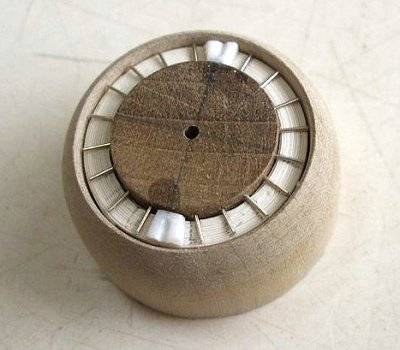
This photo shows the radiator temporarily fitted into the cowling. One of the distinctive features of the Fw 190 D-9 has now been successfully reproduced.
 |
|---|
| Fig. 3-7 Engine Trial Assembly |
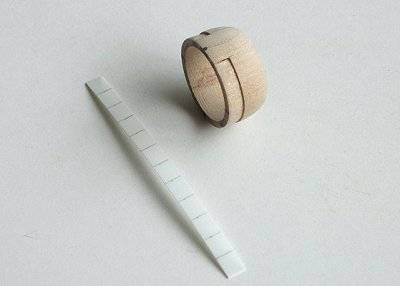
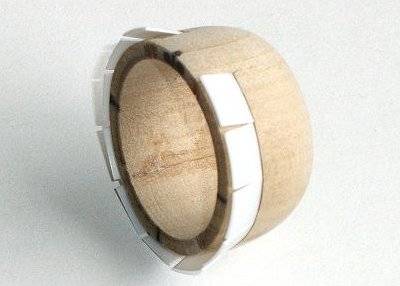
Eleven cowling flaps are attached to the outer rim of the annular radiator cowling. Carefully carve the mounting grooves for these flaps in the finished cowling using a design knife. Cut 0.3 mm-thick plastic sheet into 4 mm-wide strips to form the flaps. Fit them temporarily into the grooves on the cowling to determine the total circumference, then divide that length evenly into eleven pieces.
 |
|---|
| Fig. 3-8 Cowling Flaps |
Cut the marked plastic strip into eleven individual flaps. Curve each one by pressing it against the handle of a brush or similar round tool. Attach the first five flaps from the upper right using instant adhesive, then attach another five from the upper left in the same way. The final flap, at the bottom center, is used to fine-tune the overall fit—if it’s slightly too long, trim it; if too short, make a new piece to adjust the length precisely.
 |
|---|
| Fig. 3-9 Adjustment of Cowling Flaps |