Fw 200 C-3 Construction Record
Introduction
This page is the entrance to the Focke-Wulf Fw 200 C-3 Construction Record by Kazu Fukuda.
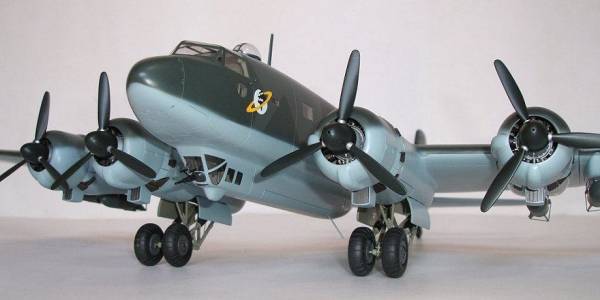
This record preserves the making of a large four-engined solid model aircraft. It follows the work from material preparation and trial assembly to interior work, nacelles, engines, propellers, bombs, painting, final assembly, and completion.
The purpose of this page is to guide readers to the main parts of the record.
For the full sequence of work, see the chronology. For the preserved source material, see the original record pages. For interpretation of the making process, see the reading pages.
Main Navigation
Chronology | Original 01 | Original 02 | Original 03 | Original 04 | Original 05 | Original 06 | Original 07
Reading Pages: Reading 01 | Reading 02 | Reading 03
About This Record
The Fw 200 C-3 record is a parts-based and process-based construction record.
The original material was not arranged strictly in chronological order. It had been organized mainly by parts and fields of work, such as mock-up, nacelles, engines, machine guns, propellers, painting, and completed photographs.
In this archive, the record has been reorganized as far as possible according to:
- confirmed dates
- relationships within the original text
- the state of work visible in the photographs
- the natural order of model-making procedures
This reconstruction is not intended to replace the original material. It is intended to make the progress of the making process easier to follow.
Chronology
The chronology page gives an overview of the construction process.
Items with confirmed dates are arranged according to those dates. Items without confirmed dates are placed carefully, based on the text, photographs, and surrounding processes.
The chronology also indicates the level of certainty for each placement.
A: Date confirmed
B: Date not confirmed, but the position in the process is almost certain
C: Position inferred from text and photographs
D: Position still uncertain
Original Record Pages
The original record pages preserve the construction process as source material.
Original 01
Material preparation and the emergence of the overall form
Material cutting, shaping of major blocks, trial assembly, and confirmation of the overall form.
Original 02
Interior, cockpit, canopies, machine guns, and gondola
Interior parts, cockpit, side windows, canopies, machine guns, and gondola work.
Original 03
Nacelles, cowlings, wing attachment, and mock-up completion
Cowlings, nacelle parts, attachment to the wing, tail surfaces, and mock-up completion.
Original 04
Spinners and propellers
Spinner material, shaft-hole work, rotating shafts, propeller blades, painting, and assembly.
Original 05
Engines, bombs, and accessory parts
BMW Bramo engines, SC500 bombs, accessory parts, and the decision to wait for drying before painting.
Original 06
Painting and markings
Surfacer, national markings, unit codes, underside color, upper camouflage colors, and preparation for finishing.
Original 07
Final assembly and completion
Cowlings, engines, machine guns, antennas, propellers, final assembly, and completed model photographs.
Reading Pages
The reading pages interpret the construction record.
They are not source pages. They are intended to help readers understand what can be read from Fukuda’s making process: the emergence of form, the role of interior work, the decision to wait, and the final integration of parts.
Recommended Reading Order
If you are reading this record for the first time, the following order is recommended.
- Read this entrance page.
- Check the overall flow in the Chronology.
- Read Original 01 through Original 07 in order.
- Then read the reading pages for interpretation.
Readers interested mainly in the technical process may begin with the original record pages.
Readers interested in the meaning of the process may read the chronology first, and then move to the reading pages.
How This Record Differs from the He 115 B Reform Record
He 115 B Reform Record A record of reopening, correcting, and bringing an already completed model to a renewed completion.
Fw 200 C-3 Construction Record A record of building up a completed aircraft form from materials, parts, and separate processes.
Reading these two records together shows two different sides of Fukuda’s work.
One record shows how a completed model was reconsidered. The other shows how a large aircraft model gradually came into being from separate parts.
Editorial Policy
In the original record pages, the text by Kazu Fukuda is respected as source material as much as possible.
When original article text is presented, it is shown in a highlighted box.
Editorial explanations and chronological notes added by the archive are shown separately when necessary.
Editorial Note
This box is used for supplementary explanation by the archive.