5 Primer Coating
5-1 Accessories
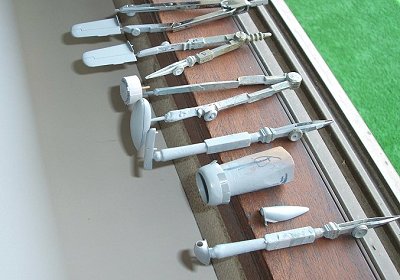
The accessories were mounted on compass or ruling pen needles, then sprayed with surfacer. From the front: supercharger air intake, armor plate support frame, cowling, ETC504 rack, 300 L drop tank, radiator, and horizontal stabilizer.
 |
|---|
| Fig. 5-1-1 Primer coating of accessories |
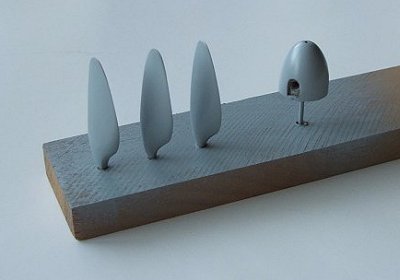
Holes were drilled into leftover material, and the propeller and spinner were inserted and fixed for spraying. Mr. Surfacer 1000 (gray type) was used as the primer.
 |
|---|
| Fig. 5-1-2 Primer coating of propeller and spinner |
5-2 Tail Unit
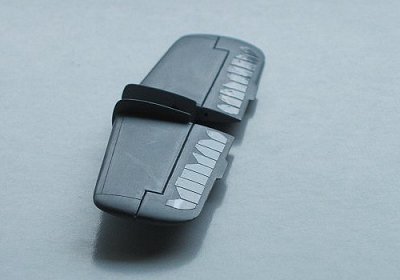
The ailerons, elevators, and rudder have an aluminum-alloy frame covered with fabric on the actual aircraft. To reproduce this appearance, a special technique was used. Using the elevator as an example: after the surfacer coat dried, the surface was sanded with #800 wet paper, then finished with #2000 wet paper. Frame lines were drawn precisely on the control surface, and cellophane tape was applied over them. The frame portions were carefully cut out with a design knife, effectively masking the fabric-covered areas. This is similar to masking the glass sections of a canopy before painting its frames. The photo shows the state after masking.
 |
|---|
| Fig. 5-2-1 Masking and priming of tail unit |
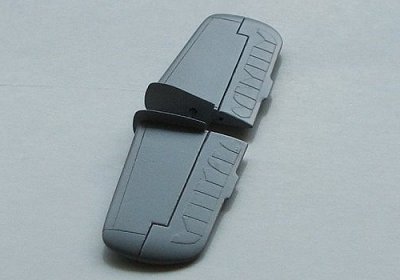
Next, three coats of surfacer were applied.
 |
|---|
| Fig. 5-2-2 Three primer coats |
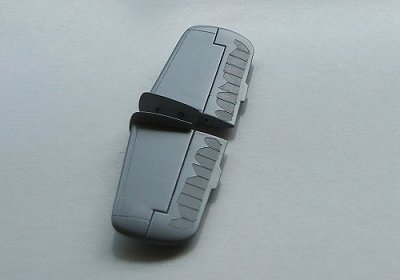
After the surfacer dried, the masking tape was carefully removed. A light additional coat of surfacer was then sprayed, which rounded the frame edges and produced a pleasing effect. The same process was applied to the ailerons and rudder.
 |
|---|
| Fig. 5-2-3 Primer after removing masking |
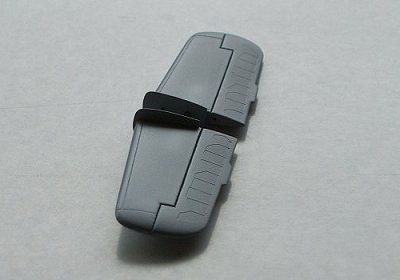
A light spray of surfacer completed the fabric-covered texture of the elevator. The same method was used for the ailerons and rudder. In particular, the ailerons required patience due to their large number of frame ribs.
 |
|---|
| Fig. 5-2-4 Primer reproduction of fabric covering |
5-3 Fuselage and Main Wing
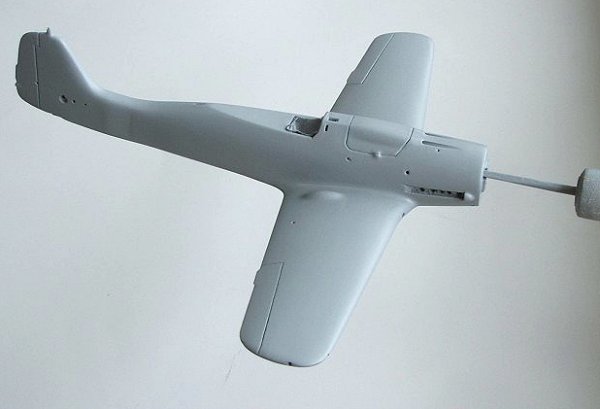
A pin vise was inserted into the nose so it could be held by its handle while spraying the surfacer. Mr. Surfacer 1000 (gray type) was used as the primer.
 |
|---|
| Fig. 5-3-1 Primer coating of fuselage and main wing |
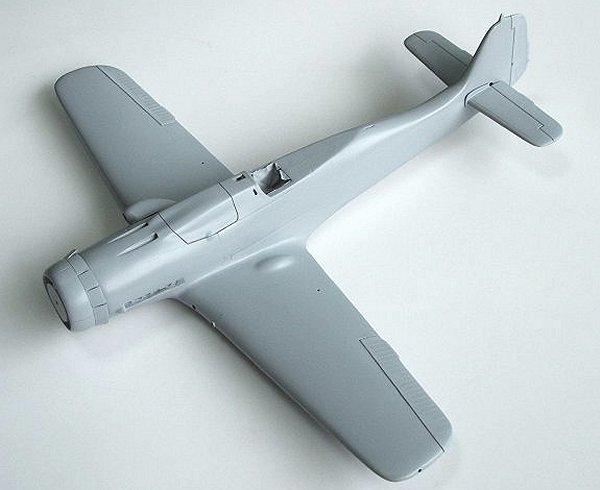
After the surfacer dried on the fuselage and wing blocks, they were sanded with #800 wet paper and finished with #2000 wet paper. The fabric-covered textures of the ailerons and rudder were also processed in the same manner as the elevators. On both sides of the fuselage, forward of the cockpit, two reinforcing plates were added. These were simulated by applying cellophane tape, cutting out the reinforcement area with a design knife, spraying four coats of surfacer, and then removing the tape after drying—leaving the appearance of an attached plate. Though a bit difficult to see in the photo, both the fabric-covered section and the reinforcing plates are visible.
 |
|---|
| Fig. 5-3-2 Priming and sanding |
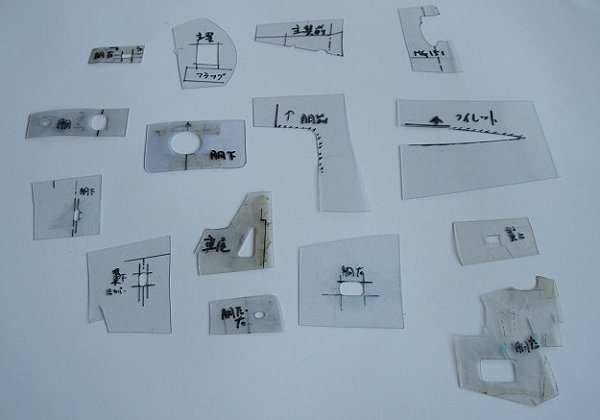
The fuselage and wings feature many small inspection hatches of various shapes—circular, oval, rectangular, and triangular. Before priming, templates for scribing these hatches were made. Thin PVC sheets (0.1–0.2 mm thick) from shirt-packaging supports were used as material. Required shapes were traced from the plans with a permanent marker and cut carefully with a design knife, then fine-tuned with wet paper as needed.
 |
|---|
| Fig. 5-3-3 Templates for scribing panel lines |
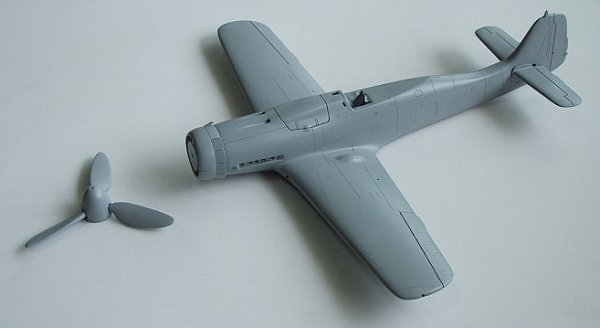
First, the panel joints and inspection-hatch positions were accurately marked in pencil. Then, using the pre-made templates, the hatches and fillets were scribed carefully with a needle. Panel seams, being straight lines, were scribed using a straightedge. Finally, the grooves were traced again with a design knife to sharpen the lines.
 |
|---|
| Fig. 5-3-4 Completion of primer coating |