Introduction
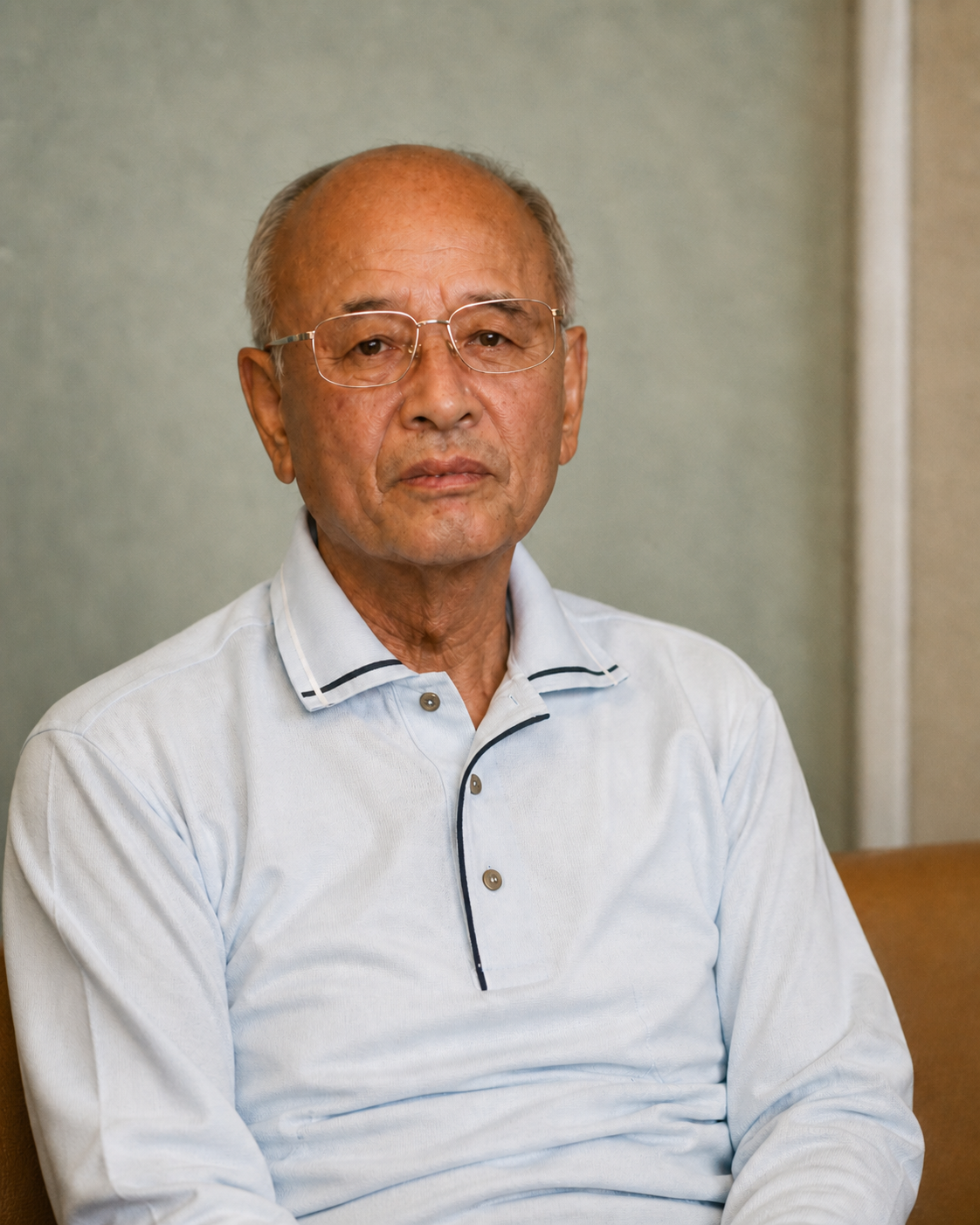
Fukuda Kazu occupies a distinctive position in Japanese solid model culture because his legacy can be read through both objects and records. The publication of his work on this site began through personal exchanges during his lifetime, and what first appeared to be a body of completed works gradually revealed a deeper historical value in the preserved stages of making.
That shift is crucial. It means that Fukuda’s importance does not lie only in what he finished, but in what his process allows later readers to see. His page belongs, therefore, not simply to the history of model display, but to the history of model documentation.
Why Fukuda matters
Fukuda’s methods can be understood through three linked qualities: careful choice of materials, precision in shaping, and meticulous finishing. Together, these indicate a maker whose work joined craftsmanship with analysis, and whose process embodied the disciplined mentality associated with Japan’s postwar solid modeling culture.
For that reason, Fukuda should be read not merely as a skilled builder. He should be read as a figure through whom the internal logic of making becomes visible. In his records, the path from material to form is not hidden behind the finished model; it remains legible.
Modeling history
In his own self-introduction, Fukuda recalls purchasing his first kit in a vinyl bag around 1954 and building his first solid model then. He writes that he remained captivated by model making for over fifty years. In 1965 he joined the Osaka Solid Model Club “Saiun Association,” and from that point devoted himself exclusively to German Luftwaffe aircraft, consistently building at 1/50 scale.
This self-description is revealing because it combines long duration, focused subject matter, and scale discipline. It suggests not restless variety, but a sustained and methodical pursuit: a commitment to working through one body of aircraft with consistency and concentration.
Discipline and limitation
Fukuda also states that he wished to continue producing as many Luftwaffe aircraft as possible for as long as his physical strength, mental focus, and eyesight would allow. That sentence is striking. It frames model making not as casual pastime, but as a disciplined practice bounded by bodily endurance, attention, and time.
This sense of limit gives additional weight to the records. They are not only evidence of completed labor; they are traces of a sustained effort to continue seeing, judging, and making while that ability remained possible.
Record as value
What makes Fukuda especially important to an archive is the recordability of his work. Many modelers leave impressive finished pieces. Far fewer leave process materials that allow later readers to reconstruct how decisions were made, how form was corrected, and how a subject was interpreted stage by stage.
In Fukuda’s case, this recordability appears in more than one form. His materials include not only a detailed construction process record, but also a reform record of an already completed model and a parts-based, process-based construction record. This breadth is especially important, because it shows that “record” in solid model culture is not limited to straightforward step-by-step building alone.
Three records, three ways of seeing process
The Fw 190 D-9 Construction Record preserves a detailed construction process: materials, shaping, surface preparation, painting, markings, final assembly, and the completed model. It is valuable because it allows the entire making sequence to be followed as a coherent progression.
The He 115 B Reform Record is important in a different way. Instead of recording a model from blank material to completion, it documents the reopening of an already completed work, the correction of that work, repainting, and renewed completion. This gives unusual visibility to revision as a way of re-reading form.
The Fw 200 C-3 Construction Record adds yet another dimension. It is strongly parts-based and process-based, showing material preparation, interior work, nacelles, engines, propellers, painting, final assembly, and the completed model. This makes it particularly useful for understanding how complex construction can be broken into readable units.
Why this matters for fine-scale.net
Taken together, these three records make Fukuda especially important to fine-scale.net. They show that his value lies not only in finished models, but in the many ways his work can be read: as full construction sequence, as reform and correction, and as parts-based working logic.
This kind of range is rare. It allows the viewer to move from author profile to working record, and from biography to evidence. More importantly, it allows “record” itself to emerge as a central category of Japanese solid model culture.
Reading continuity
Fukuda should be read as part of a longer sequence. From Omachi to Takami and then to Fukuda, one can trace different but connected aspects of Japanese solid model culture: expressive force, disciplined craft, and documented process.
In that sequence, Fukuda represents a particularly important moment: the point at which the preservation of making itself becomes historically visible.